
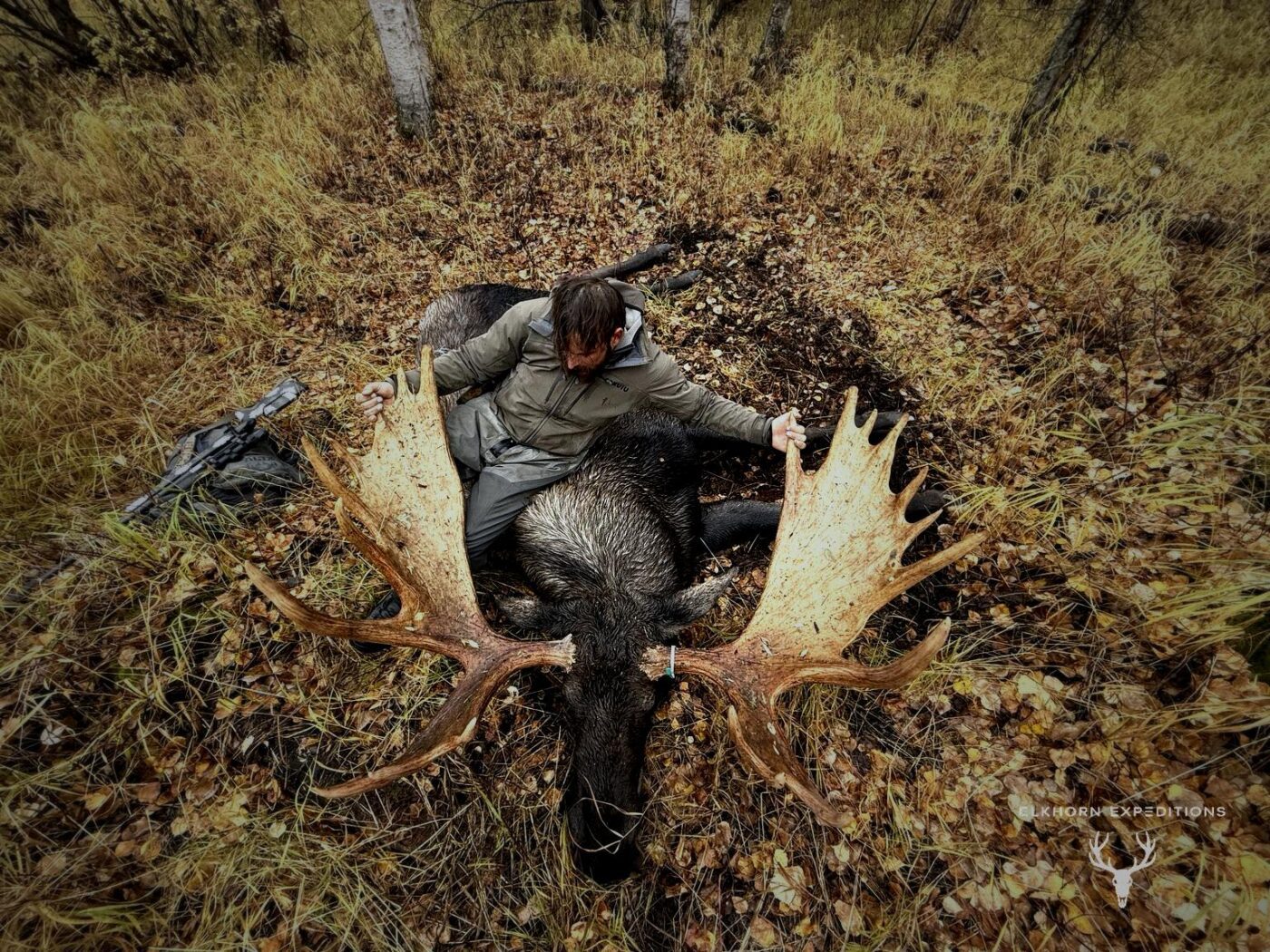
I’ve talked to plenty of hunters who think they’re ready for Alaska because they’ve spent years chasing elk through the mountains of Colorado, Montana, or Wyoming. And don’t get me wrong… elk hunting is tough. I’ve done it myself.
But I’m here to tell you something…
You can have 20 years of elk hunting experience under your belt, and Alaska will still kick your a**. Whether you’re chasing moose, caribou, bear, sheep, or mountain goats, there’s something about hunting Alaska that simply cannot be replicated in the Lower 48.
And I’m not just talking about the weather. I’m talking about the sheer brutality of the entire experience.
It’s one of the reasons I created my free DIY Alaska Moose Hunting Masterclass. I wanted hunters to understand what they’re actually getting themselves into before spending thousands of dollars on an adventure that can push them well beyond their limits.
Because Alaska doesn’t care how many elk you’ve killed…
In the Lower 48, a difficult hunt might mean climbing 3,000 vertical feet, battling nasty weather, or packing an elk several miles back to the truck. In Alaska, that might just be Tuesday morning…
Imagine spending ten days in a remote wilderness area where everything you own is soaked. Your boots haven’t been dry in a week. You’re exhausted, cold, and haven’t seen a single animal. Every step through the tundra feels like walking across a field of wet basketballs. The brush is so thick you can barely see ten feet in front of you, and the mosquitoes seem determined to carry you away.
And the worst part?
There’s no truck waiting at the trailhead. No warm hotel room. No restaurant. And no easy way out. You’re there until your bush pilot comes back, assuming the weather allows him to fly…
The Physical Demands
One of the biggest misconceptions about hunting Alaska is that being in good physical shape automatically means you’re prepared. It doesn’t. You can run marathons, squat 400 pounds, and hike the Rockies every weekend. None of that completely prepares you for walking across miles of saturated tundra.
The ground itself is working against you. Every step sinks, shifts, or rolls beneath your feet. Your ankles are constantly fighting for stability. Your hip flexors and knees take a beating, and muscles you didn’t even know existed start screaming.
Then there’s the brush.
A half-mile hike through thick alder and willow can take hours. You’re climbing over deadfall, crawling beneath branches, and constantly fighting vegetation that seems determined to keep you from reaching your destination. Now add a 50-pound pack… And rain… And temperatures hovering just above freezing.
The distance you can comfortably cover in the Lower 48 means absolutely nothing when you’re fighting Alaska’s terrain. I’ve seen hunters plan routes on satellite imagery that look like easy two-mile walks. What they don’t realize is that those two miles might represent an entire day’s worth of physical punishment. And unlike a normal backpacking trip, you don’t necessarily get to rest when you’re exhausted.
You still have to establish camp, collect water, prepare food, protect your equipment, and be ready to hunt again the following morning… the physical demands are cumulative. By day five, your body may be paying for every miserable step you took on day one.
The Mental Battle
The mental battle is worse than the physical one.
Most hunters spend months preparing their bodies for an Alaska hunt. They hit the gym, hike with weighted packs, and convince themselves they’re ready. But very few prepare for what Alaska does to your mind.
Days of relentless rain, freezing temperatures, isolation, poor sleep, and physical exhaustion can wear down even the toughest outdoorsmen. And here’s something people don’t talk about enough. You can be physically capable of finishing a hunt and mentally incapable of continuing… there’s a difference.
When you’re cold, wet, hungry, and exhausted, your ability to make good decisions begins to deteriorate. Little problems become enormous problems. A broken tent pole feels like a catastrophe. A disagreement over where to hunt turns into an argument. The thought of putting wet boots on for the sixth consecutive morning becomes almost unbearable.
Eventually, some hunters reach a point where they simply don’t want to be there anymore. They stop hunting. They stop contributing around camp. They want to go home. And in Alaska, that’s where things can get complicated.
What Happens When Someone Mentally Checks Out?
This is one of the most overlooked logistical risks of a remote Alaska hunt.
Let’s say you and your hunting partner have been dropped off 100 miles from the nearest town. You’ve scheduled a ten-day hunt, and your bush pilot isn’t supposed to return until the end of the trip.
But on day four, your partner has had enough. He’s cold, exhausted, miserable, and wants out. Now what? You can’t simply load up the truck and drive home…
Your bush pilot may be booked solid. Weather conditions might prevent him from flying. Your camp may be accessible only by floatplane, and the lake or river conditions may have changed since you arrived. Even if an early pickup is possible, it could involve additional expenses, aircraft availability, and rearranging an already complicated transportation schedule.
And if you’re on a float hunt, it gets even worse.
Your pickup location might be 40 river miles downstream. You can’t simply call the pilot and ask him to land wherever you happen to be. You still have to navigate the river, manage your equipment, and reach a location where an aircraft can safely retrieve you.
Now imagine trying to accomplish that with a hunting partner who has mentally given up. You’re no longer just managing your own exhaustion. You’re managing his, too. You may find yourself handling camp chores, navigating, preparing meals, and making critical decisions that were supposed to be shared responsibilities.
And if someone becomes so distressed or exhausted that they can’t safely travel, the situation can escalate from an inconvenience to a genuine emergency.
A satellite communicator is an essential safety tool, but it isn’t a guaranteed taxi service. Emergency rescue resources are for actual emergencies, not simply because someone has decided they’ve had enough.
This is why choosing the right hunting partner is every bit as important as choosing the right hunting area. Because when things get ugly in Alaska, you need someone who can keep functioning even when they’re absolutely miserable.
Where the Real Work Begins
Let’s assume you’ve survived the weather, the terrain, and the mental exhaustion… then, finally, you kill a bull moose.
Congratulations.
But your hunt just became exponentially more difficult. A mature bull can leave you with hundreds of pounds of meat that must be properly cared for and transported. My last Alaska bull yielded 637 pounds of meat. That’s not counting the antlers, cape, hunting equipment, and everything else that needs to make it back to civilization.
Now imagine that animal dies a mile from your raft… a mile doesn’t sound bad, right?
Try carrying heavy loads through waist-high brush, saturated tundra, and uneven terrain after a week of physical exhaustion. And remember, you don’t get to decide when the meat needs attention. Meat care becomes the priority immediately. Depending on temperatures and conditions, delays can create serious spoilage risks. That means you may be working well into the night, making repeated trips through difficult terrain, and operating on very little sleep.
This is where a mentally exhausted hunting partner becomes more than an inconvenience. If he refuses to help, the workload falls on you. And if you’re not physically capable of handling that workload alone, you could find yourself in a very serious situation.
Before you ever pull the trigger, you’d better have a realistic plan for getting that animal out.
Mother Nature Doesn’t Care
You can spend thousands of dollars planning the perfect Alaska adventure. You can research hunting areas, hire an experienced bush pilot, and purchase the best gear money can buy. But Mother Nature gets the final say.
Rain, wind, fog, snow, and rapidly changing conditions can completely derail your plans. A ten-day hunt can quickly become a twelve-day hunt when your pilot can’t safely reach you. Or you might lose several hunting days sitting inside a tent waiting for conditions to improve.
And here’s something else to consider.
Every additional day requires food, fuel, and other supplies. If you planned for exactly ten days and the weather keeps you there for thirteen, you’ve created an entirely new problem. That’s why I always encourage hunters to plan for delays and build contingency supplies into their logistics.
Alaska operates on its own schedule. Not yours.
So Why Do We Keep Going Back?
Because there’s nothing else like it.
There’s something extraordinary about standing in a place so remote that you might be the only human being for miles. There’s something humbling about realizing just how small you are in a wilderness that couldn’t care less whether you succeed or fail. And there’s something deeply satisfying about pushing yourself farther than you thought possible.
But here’s my advice…
Don’t go to Alaska expecting another elk hunt. Go expecting to be challenged physically, mentally, and emotionally. Train your body, but prepare your mind. Choose your hunting partners carefully. Understand your transportation logistics. Have contingency plans. And never underestimate how quickly small problems can compound when you’re hundreds of miles from home.
Most importantly, recognize the difference between being uncomfortable and being in genuine danger. There’s no shame in making a responsible decision to protect yourself or your hunting partners.
Because if you go into Alaska expecting comfort, you’re going to have a miserable time. But if you go prepared, understand your limitations, and learn to embrace the suck? You might just experience the greatest adventure of your life.
Thinking About Planning Your Own Alaska Hunt?
In my FREE DIY Alaska Moose Hunting Masterclass, I walk hunters through the realities of planning a remote Alaska hunt, including equipment, transportation, bush pilots, safety, meat care, and the mental preparation required to succeed.
The course is completely free, and students receive access to exclusive gear discounts from participating outdoor brands.
Start planning your adventure at www.elkhornx.com