
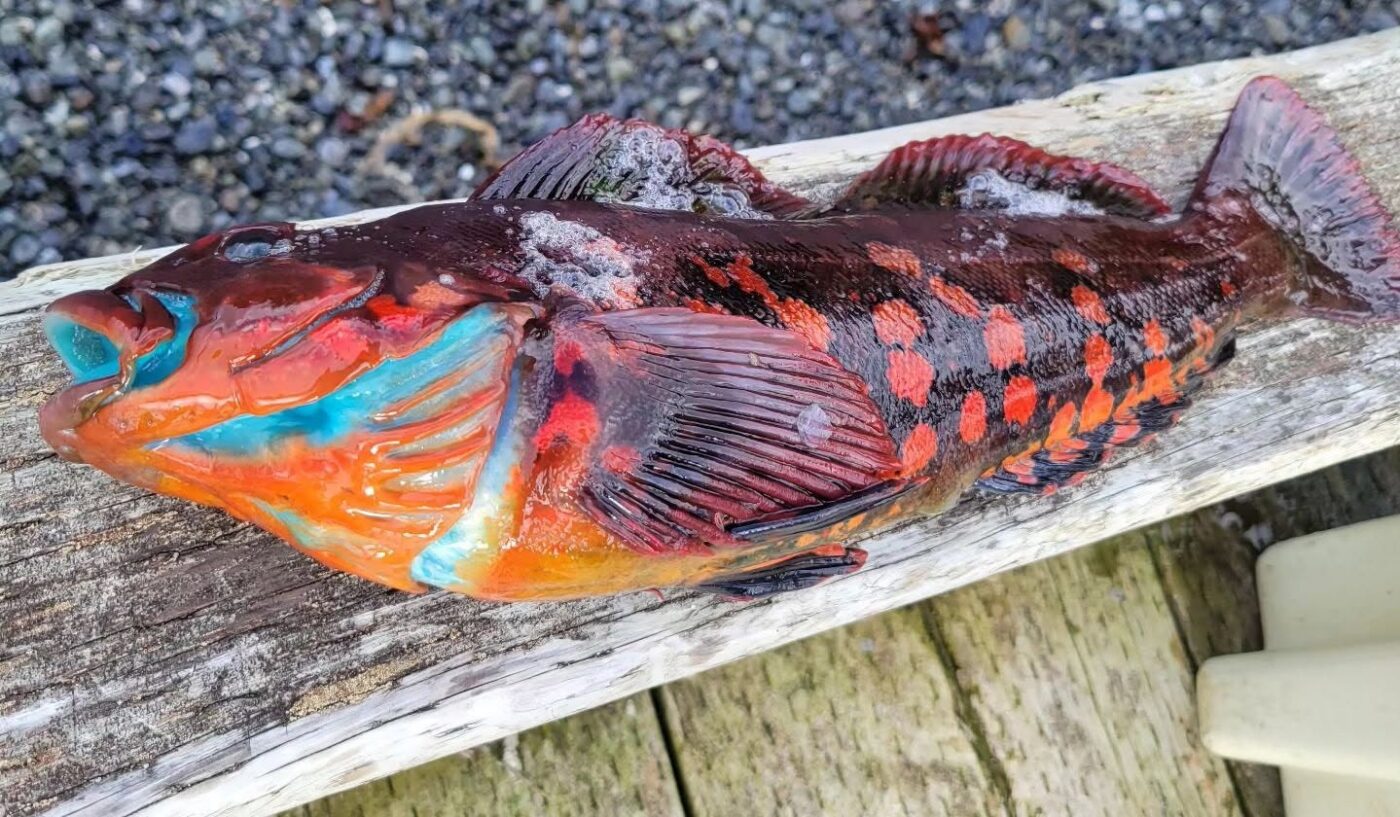
There are half a million different examples of why God’s creation is just stunning, and this might be one of those examples that you weren’t exactly aware of. Have you ever heard of the rock greenling? Well, unless you’re bank fishing up in Alaska, or the Pacific Northwest, it probably isn’t all the familiar.
The rock greenling is a visually stunning, bottom-dwelling marine fish native to the rocky coastlines and kelp forests of the North Pacific. Known for their bizarrely beautiful appearance and fascinating biology, they are a favorite target for coastal anglers.
Their range stretches from the central coast of California, all the way up through the Pacific Northwest and Alaska, across the Aleutian Islands, and down into the coastal waters of Russia and Japan. They are shallow-water specialists that thrive in highly turbulent, rocky inshore areas, tidal pools, jetties, and dense kelp beds.
Rock greenlings are heavily mottled to blend perfectly into the colorful, algae-covered rocks and kelp environments they call home. Females usually sport varied shades of brown, green, and copper, whereas the males take it to another level. During the fall spawning season, males undergo a dramatic transformation, developing neon-bright patches of deep red, orange, blue, and purple.
This serves a dual purpose: attracting mates and maintaining camouflage among brightly colored seaweeds and anemones while guarding their egg nests.
Rock Greenling Fishing
Because they live right in the rocky surf zones, anglers primarily target them from jetties, rocky shorelines, or kayaks… areas where it’s quite difficult to bring a boat. And you don’t need heavy gear to wrestle with fish… a medium-light spinning setup works perfectly. As opportunistic ambush predators, dropping small jigs, grub-tail swimbaits, or natural bait (like shrimp, sand worms, or clam necks) directly into rocky crevices or alongside kelp stalks will usually trigger an aggressive strike.
However, getting them out can be a chore because once hooked, they will immediately try to dive back into the rocks to break your line. You have to get them up quickly, away from the rocky structure where line can fray.
However, despite their stunning outward appearance, what’s on the inside is the real draw.
Like their larger cousin the lingcod, rock greenlings frequently have vividly colored blue or bright teal flesh. This shocking color is caused by a bile pigment called “biliverdin” that binds to the blood serum within the fish’s muscle tissue. While it looks like a radioactive science experiment on the cutting board, it’s completely harmless. And what’s even more fascinating, the pigment completely breaks down when exposed to heat.
The meat turns a standard, flaky white as soon as it is cooked and is known for being incredibly mild and delicious… right up there with sablefish, halibut, and lingcod.
As mentioned above, rock greenlings are mainly found along the Pacific coast, and this specific one in the photos was actually caught in Homer, Alaska. The business that posted the pictures, which is called the Lodge at Otter Cover, is actually a fishing lodge that offers “fishing adventures of a lifetime.”
As you can see, the inside of the fish (looking down its mouth) is a bright neon blue, and when the fisherman begins to carve out the fillets, they are also that strange, turquoise color.
The thing looks like it’s straight out of a sci-fi movie, or maybe even Dr. Seuss’ One Fish, Two Fish, Red Fish, Blue Fish. Multiple pictures of the aquatic creature were posted on social media with the caption:
“Went out fishing today and caught a rock greenling. The flesh is blue. It turns white when you cook it. Mother nature is incredible.”
A lot of people on Facebook were admiring the viral rock greenling, leaving their thoughts in the comments below:
“Wow! That’s incredible looking.”
“Beautiful! God has a sense of humor.”
“What a beautiful looking fish!”
“That’s amazing! Had no idea such a fish existed!”
“I hope a mount is made of this fish.”
Yeah, I don’t that’s going to happen, considering that the guy posted the video of him cooking the fish in the comments section of the Facebook post.